


 Necklace

 Bracelet
 Ring
 Earrings
 CN


Jewelry coloring is a technique that is used to give jewelries a new look while making it resistant to corrosion or any other surface damage.
There are different methods of jewelry coloring and they all utilize distinct materials and techniques to ensure the colors bond perfectly.
1. Enameling
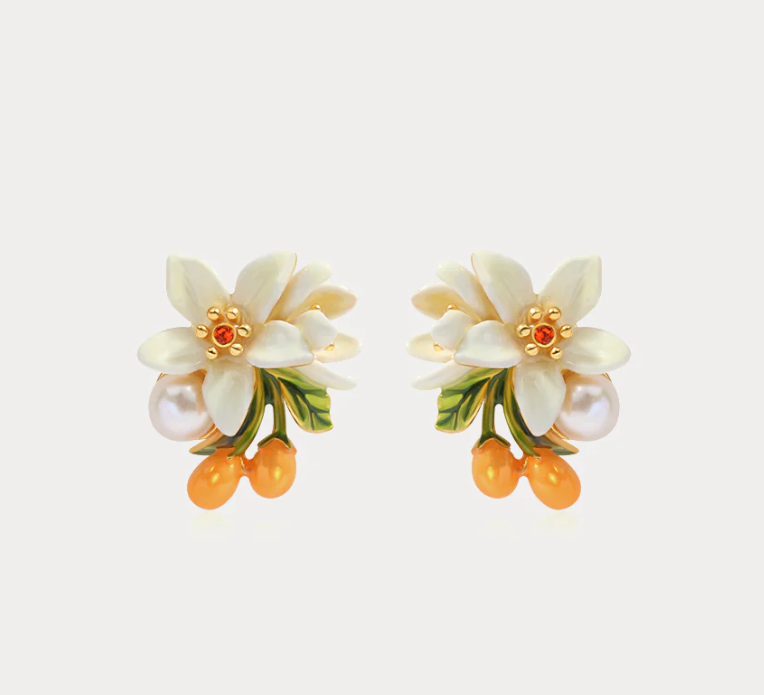
Enameling jewelry is a coating method that involves fusing powdered glass onto the base metal at very high temperatures.
The substance gives the jewelry a more appealing look, while enhancing its durability.
Typical Enamel Colors
Enamel color displays a wide spectrum of hues like rich blue, fiery red, radiant yellow, and lush green. Pestle and metallic shades are also
achievable through the use of special techniques and additives. However, the type of color displayed on the jewelry’s surface depends
on the mineral combination applied.
Applications of Enamel Colors
After the surface of a substrate metal has been prepared, the next thing is to apply the coating.
Learn how to color jewelry with enamel coating below:
Single-Color Application: This process is carried out using a roller, brush, or spray gun to apply enamel on metal. After this, sifting is done
to remove excess enamel before firing it in a kiln at temperatures ranging from 750 to 850 degrees Celsius or more.
Layering Colors: This involves layering several colors on one piece to create unique and vibrant colors.
When the first enamel layer is applied,
it is left to cool before other sets of colors are applied to the surface.
In order to create proper adhesion, the jewelry undergoes a drying and firing process at 1300⁰ to 1600°F depending on the type of underlying
metal. This results in a glossy and smooth finish that adds to the jewelry’s visual interest.
Popular Plating Colors
Popular colors include 14K gold, 18K gold, silver plating, rhodium plating, gun black, and rose gold electroplating. These colors are then
accompanied by proper surface finishes to create a striking visual match.
2. Electroplating
This is a method through which thin layers of metal are applied on the surface of a jewelry using an electric current. It creates a high-quality
finish that hides
the jewelry’s imperfections and protects it from corrosion.
Electroplating jewelry helps to create a different surface appearance. Once it is dipped in an electrolyte solution, a negative charge is applied to absorb
positive ions from the solution to the jewelry’s surface.
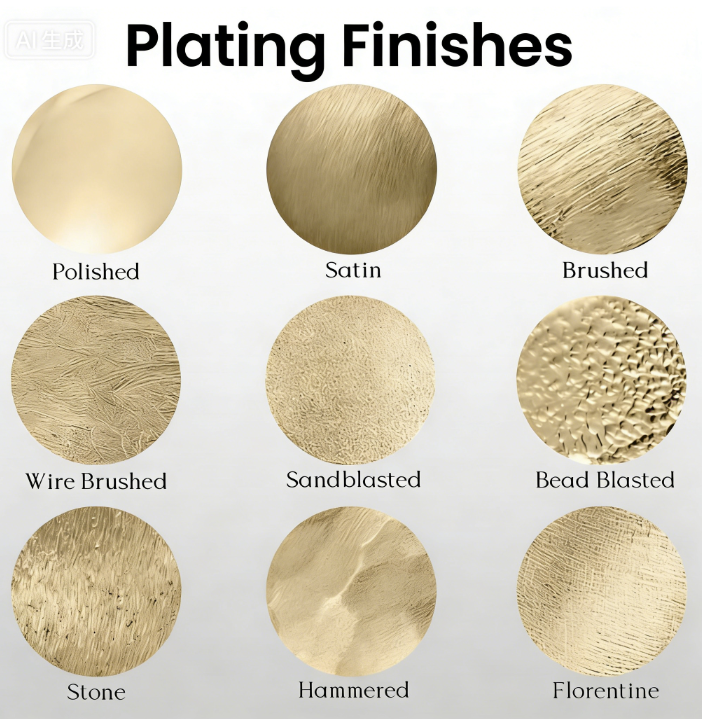
What truly sets a design apart is the language of surface finishing.
Each finish speaks differently — through touch, light reflection, and brand identity:
✨ Polished — timeless, mirror-like brilliance.
✨ Satin / Brushed — soft and subtle, creating modern elegance.
✨ Wire Brushed / Sandblasted — industrial textures with airy matte effects.
✨ Bead Blasted / Hammered / Florentine — rich tactile depth and layered reflections.
3. PVD Coating
PVD (physical vapor deposition) is a high-tech process that involves the vaporization of solid materials within a vacuum to form an ultra-thin layer of coating
on a jewelry’s surface. The coating increases a jewelry’s durability by creating a surface that is resistant to abrasion.
Various metals can be used for PVD coating jewelry but stainless steel is the most prominent due to its mode of adhesion.
Explore more to learn why not PVD coating on silver and brass base metals. Different PVD coating colors are often achieved by adjusting the
ratio of elements utilized during the deposition process.The type of color it displays is determined by the electrolyte solution.
Common PVD Coating Colors
PVD color coatings can be applied on PVD gold plated jewelry and many other jewelry metals to derive colors like original steel color, gold, rhodium, black,
blue, purple, and rainbow.
4. E-Coating
Jewelry e-coating process involves submerging the jewelry into a ceramic solution and passing an electric current all over its surface to uniformly coat every
part of the piece. This process is applied to various jewelry types to enhance durability and create unique aesthetic colors.
Nevertheless, e-coating jewelry boasts of a wide range of vibrant colors, with different shades that can be adjusted through additional surface finishing.
E-coating Colors
Transparent E-coating: This is a colorless, clear type of e-coating with thin layers of resin on the jewelry’s surface. It’s often applied on jewelry to retain the color of its
base metal and make the jewelry last longer.
Colorful E-coating: This involves the use of unconventional metal colors like blue, pink, green, or red on a jewelry’s surface. It entails the use of several hues
that can be tweaked into several colors.
5. Jewelry Oxidization
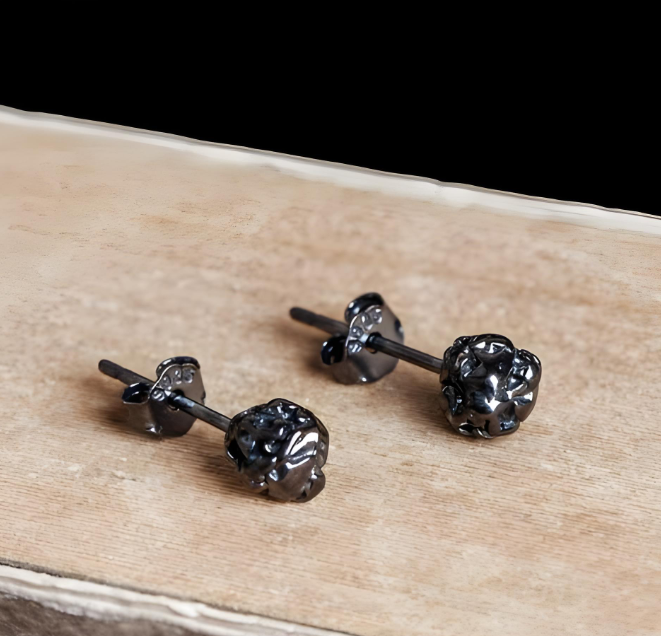
Oxidized jewelry making process involves using metals that have been intentionally darkened using a series of chemical processes.
The aim of this technique is to give the jewelry a strong, black patina that makes it look like an antique material.
Several metals can be used for this procedure but silver provides the best result because its reaction with sulphur creates black sulfide layers faster than any other metal.
This process is just a sped-up version of the usual tarnishing process.
Color and Effect
Oxidized jewelry has a darkened, antique, or vintage look due to a controlled oxidation process, typically using sulfur or other chemicals.
The oxidation creates a black, gray, or deep charcoal surface finish, adding contrast and depth to the design.
Tips on Choosing the Right Jewelry Coloring Method for Your Jewelry Line
Considering the material and style you want to use: PVD coating jewelry boasts excellent durability and corrosion resistance. It’s best recommended for stainless steel jewelry.
For silver and brass metal, electroplating is usually applied. It is best to further add a layer of transparent e-coating to enhance its durability.
Enamel is used to color jewelry pieces with bright, unique colors, while oxidization is best used on silver for antique and vintage style.
All of the five jewelry coloring methods in this article have their own way of adding durability and aesthetic appeal to a jewelry.
In order to obtain a perfect adhesion between a substrate and its coating, it is important to know the metal type that complements each coloring method.


QINGDAO STYLE FASHION JEWELRY CO.,LTD
Buiding No.24, No.599, Runcheng road,Chengyang district,Qingdao,Shandong, China


 Dec 20,2025


 Necklace